Retail decisions often happen in seconds. A product must be visible, understandable, and accessible before the shopper reaches the checkout. Point of sale displays support each of these requirements.
A display does more than hold products. It creates a defined brand location inside the store. It separates products from standard shelf placement. It presents a campaign, product range, or promotional message at the point where purchase decisions take place.
For marketing directors, purchasing directors, and retail buyers, the right POS display is a sales tool and a brand asset.
Why Point of Sale Displays Matter
Standard shelves place products within a category. POS displays give products a second point of visibility.
This additional placement can:
- Increase product visibility
- Present a product outside its standard category
- Support a product launch
- Communicate a promotion
- Encourage impulse purchases
- Improve brand recognition
- Guide shoppers through a retail space
- Create a dedicated location for a campaign
Research on retail displays connects prominent in-store placement with increased shopper attention and impulse purchasing. Sources including ScienceDirect and Lightspeed describe the role of point of sale marketing in influencing decisions at the final stage of the shopping process.
The reason is direct. The display reaches the shopper when the product can still be added to the basket.
The Point of Purchase Is a Decision Zone
The point of purchase is not limited to the checkout counter. It includes any retail location where a shopper can see, consider, and select a product.
Relevant locations include:
- Store entrances
- Main aisles
- Promotional zones
- Shelf ends
- Checkout areas
- Service counters
- Event retail spaces
- Temporary campaign areas
Each location requires a different display format.
An entrance display must attract attention from a distance. A counter display must work within a limited footprint. A floor display must organise several products and remain stable during use. A campaign display may also need to support signage, product information, or digital content.
This makes display planning a technical process. The product, retail location, stock quantity, customer movement, campaign duration, and transport requirements must be considered before production.
Cardboard Displays: Flexible and Efficient
Cardboard displays are suitable for campaigns that require flexibility, efficient logistics, and fast implementation.
They can be printed across large surfaces. This gives brands space for:
- Product communication
- Campaign graphics
- Brand colours
- Product benefits
- QR codes
- Price messages
- Seasonal communication
- Retailer-specific information
Cardboard also supports a range of structural formats. These include shelves, trays, bins, hooks, headers, side panels, and modular sections.
For temporary promotions and product launches, cardboard offers practical benefits. It can be shipped flat, assembled at the destination, and adapted for different product sizes. It also allows a campaign design to be changed without replacing a permanent fixture.
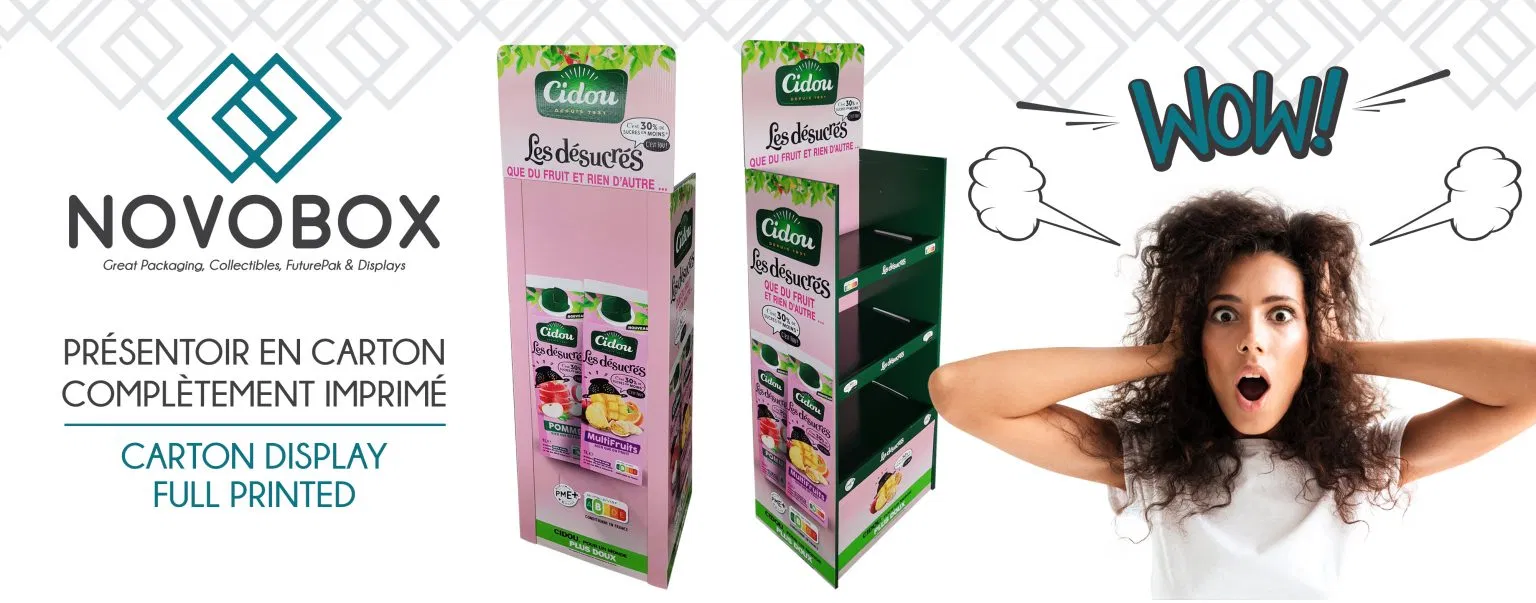
Novobox develops custom cardboard displays for retail products and promotional campaigns. The Novobox cardboard display page shows examples of printed display structures designed for product presentation.

Wooden Displays: Structure and Product Positioning
Wooden displays provide a rigid structure and a defined retail presence. They are suitable when the display must support repeated use, heavier products, or a longer campaign period.
Wood can be used for:
- Branded retail furniture
- Premium product presentation
- Reusable campaign units
- Product platforms
- Shelving systems
- Display boxes
- Event and showroom installations
The material also supports integration with other components. Wood can be combined with printed panels, metal supports, acrylic elements, lighting, or product-specific holders.
The main requirement is structural planning. Product weight, shelf spacing, assembly, transport, and storage must be defined before production. A wooden display must be designed for the actual retail environment rather than treated as a standard box with shelves.
For brands that need a display with a longer service life, wood can provide the required base structure. Novobox also works with wood packaging solutions, providing experience with custom wood components and product presentation.
Metal Displays: Durability and Long-Term Use
Metal displays are suitable for applications that require durability, repeat use, or support for heavier products.
They can be used for:
- Permanent retail installations
- Premium product ranges
- Electronics and accessories
- Gaming products
- Media products
- Promotional fixtures
- Retail equipment
- Branded merchandising systems
Metal supports precise construction and stable product positioning. It can also be finished with paint, print, coating, or additional branded panels.
A metal display may be selected when the unit must remain in use across multiple campaigns. In this case, replaceable graphics or modular components can allow the same structure to support different products over time.
Novobox has experience with metal packaging and metal product solutions, including metal packaging production. This technical knowledge can support display projects where metal components, structural strength, and product protection must work together.
Counter Displays for the Final Purchase Prompt
Counter displays are compact units placed on checkout counters, service desks, reception areas, or other small retail surfaces.
Their purpose is immediate access.
Counter displays are suitable for:
- Small accessories
- Collectible cards
- Magnets
- Add-on products
- Trial products
- Limited editions
- Small media products
- Promotional items
The format works because it occupies the shopper’s field of view during a waiting period or transaction. The product does not need to compete with a full aisle. It has a specific location and a limited message.
A counter display must meet several requirements:
- Small footprint
- Stable construction
- Clear product access
- Fast replenishment
- Simple communication
- Suitable product capacity
- Compatibility with the counter surface
The structure must also avoid blocking the checkout process. Product visibility and operational efficiency must be planned together.
Standard Floor Displays for Visibility and Range Presentation
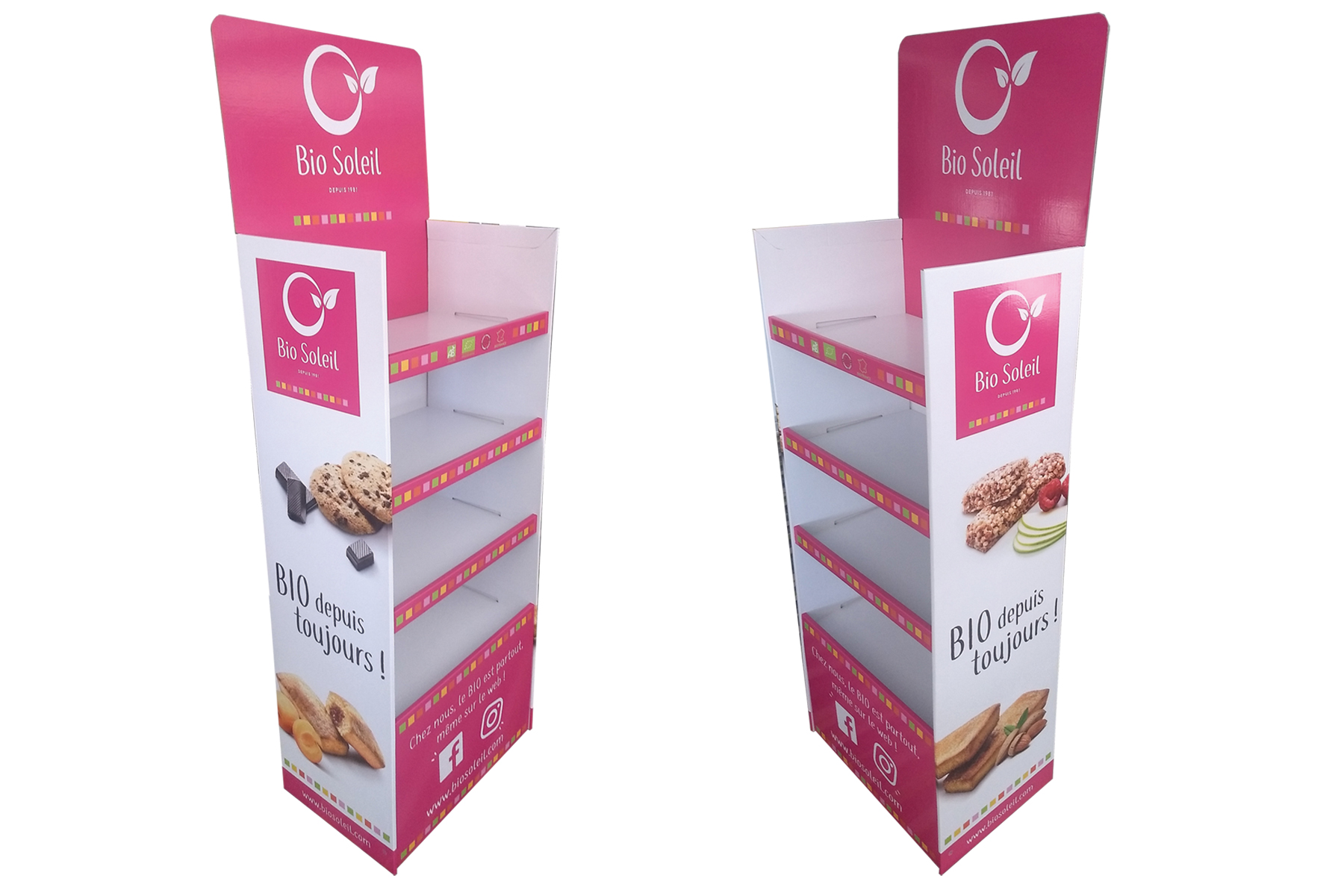
Floor displays create a larger product presentation area. They are placed on the sales floor, at aisle ends, in promotional zones, or near entrances.
They are useful for:
- New product launches
- Product families
- Retail promotions
- Seasonal campaigns
- Premium editions
- Multi-SKU presentations
- Larger products
- Products requiring explanation
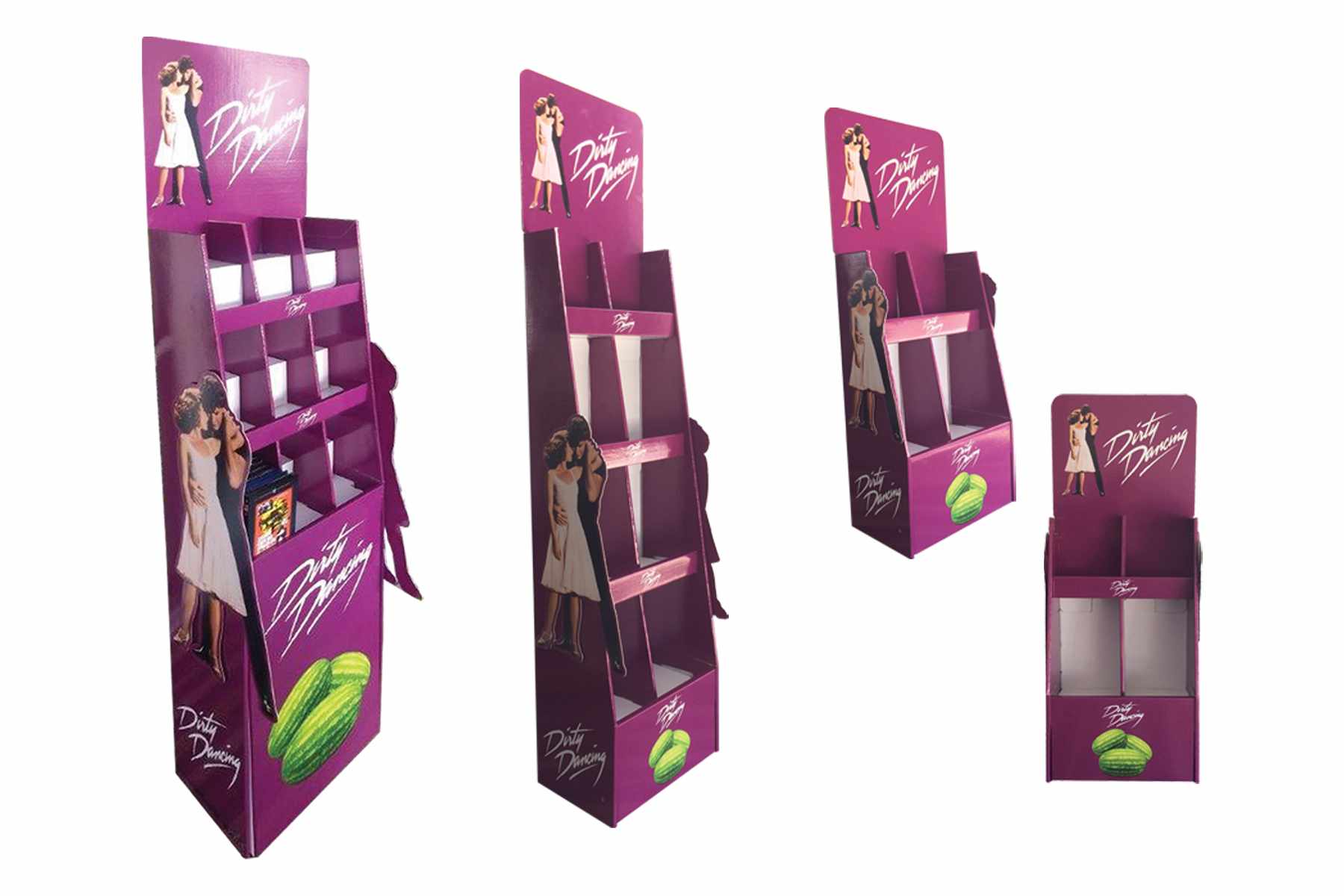
A floor display can include several shelves, product hooks, trays, storage sections, headers, and side panels. It can also provide space for a campaign message that cannot fit on a standard shelf.
The display must be designed for traffic, replenishment, and stability. The correct height matters. Product facings must remain visible. Stock must be easy to replace. The base must support the expected load. The unit must fit the available retail space.
Extensions That Increase Product Attention
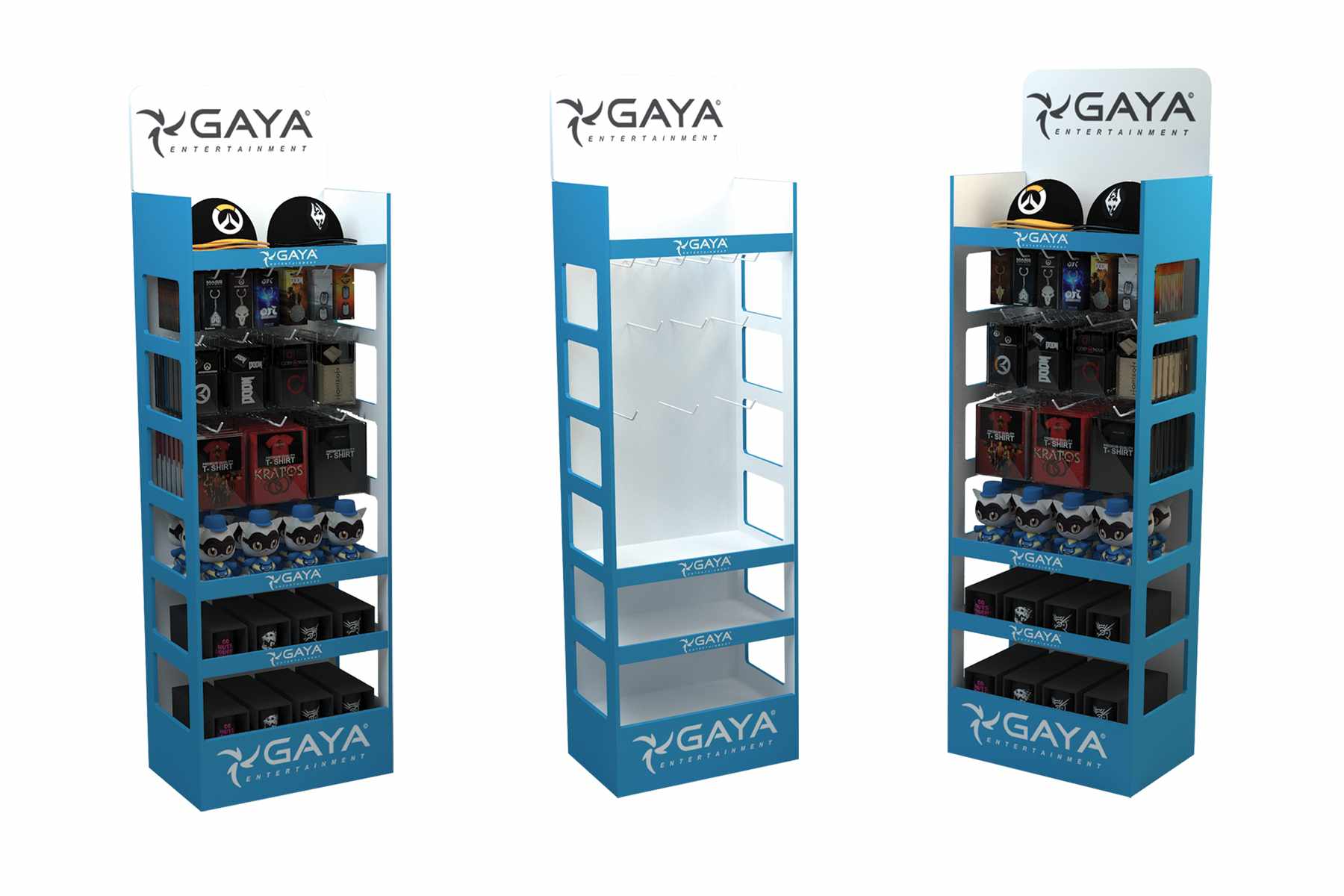
A display does not need to stop at its basic frame. Display extensions can increase the visual and physical footprint of a product.
Common extensions include:
- Top headers
- Side wings
- Brand arches
- Product platforms
- Raised shelves
- Oversized graphics
- Sign holders
- Hanging elements
- Side flags
- Header panels
- Integrated lighting
- QR code panels
These components allow brands to highlight a specific product or message. A new release can receive a dedicated header. A limited edition can be placed on a raised platform. A product benefit can be positioned at eye level. A campaign logo can extend above the standard shelf line.
The purpose is not to add components without reason. Each extension should support a defined communication or merchandising function.
A side wing can improve recognition from an approaching shopper. A header can identify the campaign from a distance. A raised platform can separate the hero product from the rest of the range. A QR code panel can connect the physical display with digital content.
The result is a display that directs attention instead of presenting products without hierarchy.
Display Design Must Connect Marketing and Retail
A successful POS display must satisfy both marketing and retail requirements.
Marketing requires visibility, brand consistency, message control, and campaign impact.
Retail requires stability, stock access, transport efficiency, assembly control, and correct use of space.
These requirements can conflict. A large graphic area may reduce product capacity. A high display may improve visibility but create transport issues. A complex structure may support the campaign but increase assembly time.
This is where technical planning is required.
Novobox can support the complete process, from initial concept and material selection through structural development, production, assembly, and logistics. The company provides display solutions for brands that require a defined retail presence and a production partner able to manage specific technical requirements.
Why Experience Matters
Display production includes more than printing and cutting. It requires knowledge of:
- Product dimensions
- Material performance
- Load requirements
- Retail standards
- Flat-pack logistics
- Assembly procedures
- Production quantities
- Delivery schedules
- International distribution
- Cost targets
Novobox has more than 20 years of experience in packaging and display production. This experience supports the development of solutions that balance presentation, function, cost, and delivery.
The company works with cardboard, wood, metal, and combined materials. This allows the display format to follow the product requirement rather than forcing every project into one standard construction.
The same production partner can also support related packaging and merchandising needs, including Futurepak metal packaging, collector editions, goodies, and product assembly.
One Partner for Display Innovation
A point of sale display must attract attention, present products, and function within the retail environment. The material, format, location, and extensions must support the same commercial objective.
Cardboard provides flexibility for temporary campaigns. Wood provides structure for repeated use. Metal provides durability for long-term installations. Counter displays support compact products and final purchase prompts. Floor displays provide space for product ranges and campaign communication. Extensions create additional visibility for selected products.
Novobox provides these solutions through one production partner with more than two decades of industry experience.
For brands in entertainment, gaming, media, food, cosmetics, and retail, the right display can turn available space into a controlled marketing channel.
The next retail decision may depend on what the shopper sees first.
Contact Novobox to develop a point of sale display based on product, placement, quantity, logistics, and target cost.